mrlewishistoricalsociety

Friday, March 31, 2006

Top Ten Millionaire Counties

The number of millionaires rose to a record level in 2005, and more than 1.1 million of them can be found in just 10 counties.

By Jeanne Sahadi
CNNMoney.com

The number of American millionaires rose to a record level last year, and they're disproportionately located in four counties in California, according to an analysis released Tuesday.

Other states with counties that boast the highest number of millionaires across the country are Illinois, Arizona, Texas, New York, Florida and Massachusetts.

Nationwide, households with a net worth of at least $1 million excluding primary residences rose 8 percent to a record high 8.9 million, according to an annual report by TNS Financial Services, a market research and polling firm.

The firm's survey found that the millionaire households had an average net worth, excluding principal residence, of nearly $2.2 million, of which more than $1.4 million was in liquid, or investable, assets.

Their overall debt levels, meanwhile, fell by 8 percent, from $179,000 to $165,000.

Who's heading these households? TNS found the median age of the head of millionaire households is 58, and 45 percent are retired. Roughly 19 percent own in whole or part a professional practice or privately held business.

Over 50 percent of the millionaires surveyed said they had become more conservative in their investment approach over the past year. Their wealth is the result of long-term wealth accumulation.

Although real estate is not their sole source of wealth, it remains a staple for many. Forty-six percent of those surveyed own investment real estate like a second home or rental properties.

Seventy percent of the households, meanwhile, owned stocks and bonds, and 68 percent owned mutual funds.

The Millionaires Next Door: Ten U.S. counties with the highest number of millionaire residents
RankCountyNo. of millionaire households
1Los Angeles County, CA262,800
2Cook County, IL167,873
3Orange County, CA113,299
4Maricopa County, AZ106,210
5San Diego County, CA100,030
6Harris County, TX96,593
7Nassau County, NY78,816
8Santa Clara County, CA75,371
9Palm Beach County, FL69,871
10Middlesex County, MA67,552

Thursday, March 30, 2006

GRADES

mr lewis.. are you going to post grades up? Report card pick up is around the corner.. and i'm just wondering.

Wednesday, March 29, 2006

Essay Test ideas

First off, be able to define the terms. You should know the definition of New Urbanism, Gentrification and Urban Sprawl and look up several differing definitions so you think you will have a well-rounded idea os what to say.

Secondly, think about terms that go along with New Urbanism, Urban Sprawl and Gentrification. Things like single-use zoning or multi-purpose zones, office parks, high rise buildings, malls, strip malls, cars, single-family homes, etc all go with either new urbanism or sprawl depending. Look up info in your book, review that new urbanism website and think of possible examples. Phoenix is definitely a sprawl town at its worst. The recent developments in Evanston go along more with new urbanism. Realize these terms and ideas have faults not every town will fit the def's in every way in every area of the town perfectly.

Look at those handouts I just gave you. Look at the models. How do you best define them? What are the assumptions that the models make? What weaknesses do they potentially have? What time period were they developed for?

How does the sector model differ from the concentric zone and why? What weakness was that model trying to make up for? What are the areas in the sector model and how are those areas now an issue (think manufacturing and how these jobs once at the core have gone to the periphery).

For gentrification think about how it has changed neighborhoods. Think about the basics. Gentrificaiton means the change from working class renters to wealthier owners who buy buildings converted into condos. These people are usually well established within the home country (3rd or later generation immigrants). This means a change in the culture of the hood. Latter immigrants are more likely to want popular and earlier working immigrants are more lkely to have ethnic folk cultures. So when the rich come in, the culture of the hood changes and businesses like Starbucks come in. The locals may see that has a threat because it represents the changes that come with gentrification, differing people, business and attitudes. The gentrified are likely to not have families and more likely to be single and want the tyes of things singles want unlike the more recent immigrants being displaced who are more likely to have families.

Lastly Help each other. Use the blog tonight and keep helping each other as much as you can. Talk about test strategy. I seriously want you to think about everything I said about how to work these tests. The last essay test I am going to use as an example for all of you. This one I am going to count. We have talked enough about the strategies. Now apply them. We have to work hard on studying for this portion of this exam. Again, use the blog to help each other. I think you can guess from above what the questions are likely to ask. I am still working on the wording.

Tuesday, March 28, 2006

Pedestrian Cities - New Urbanism

Pedestrian Cities - Quality of Life - Benefits of Density


Pedestrian Cities

Designing great places for the comfort and enjoyment of the pedestrian is one of the most important aspects of New Urbanism. Taken to the highest level of urbanism, the finest places in the world are cities with entire networks of car-free streets, known as Pedestrian Cities.


Pedestrian Cities are growing in popularity in many top regions around the world. The incredible beauty, enjoyment, and convenience a network of connected pedestrian streets and squares provides to the residents on a daily basis is unsurpassed. Being able to walk to a mix of shops, restaurants, newsstands, coffeehouses and open-air markets within car-free neighborhoods and work centers delivers the highest quality of life, and adds great variety and vitality to an area. Jane Jacobs calls this "an intricate and close-grained diversity of uses that give each other constant mutual support, both economically and socially." There is a growing demand for entire city districts to be made pedestrian, and directly connected to a train line.

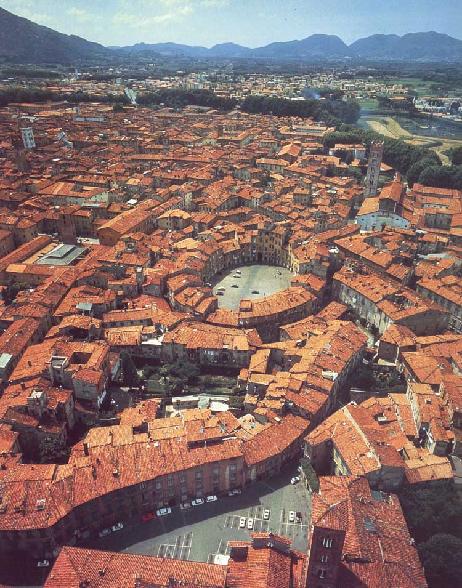
Venice
Venice, Italy is considered the greatest pedestrian city in the world because it contains the largest pedestrian street network completely free of cars. The entire city has no cars operating on its streets. The city is quite dense, yet the most relaxing and pleasant city in the world.

Copenhagen is another of the world’s great pedestrian cities. A recent issue of 'Metropolis' magazine talks about Copenhagen and its growing pedestrian street network. Although it’s blessed with certain inherited characteristics - such as a narrow medieval street grid - the city has worked steadily to improve the quality of its street life. In the 40 years since Copenhagen’s main street was turned into a pedestrian thoroughfare, city planners have taken numerous small steps to transform the city from a car-oriented place to a people-friendly one. “In Copenhagen, we have pioneered a method of systematically studying and recording people in the city,” says Jan Gehl, a Danish architect and co-author of ‘Public Spaces-Public Life’, a study on what makes the city’s urban spaces work. “After twenty years of research, we’ve been able to prove that these steps have created four times more public life.” Here is Copenhagen’s program for a more pedestrian-friendly city:

COPENHAGEN’S 10-STEP PROGRAM

1. CONVERT STREETS INTO PEDESTRIAN THOROUGHFARES


The city turned its traditional main street, Stroget, into a pedestrian thoroughfare in 1962. In succeeding decades they gradually added more pedestrian-only streets, linking them to pedestrian-priority streets, where walkers and cyclists have right-of-way but cars are allowed at low speeds.

2. REDUCE TRAFFIC AND PARKING GRADUALLY

To keep traffic volume stable, the city reduced the number of cars in the city center by eliminating parking spaces at a rate of 2-3 percent per year. Between 1986 and 1996 the city eliminated about 600 spaces.

3. TURN PARKING LOTS INTO PUBLIC SQUARES

The act of creating pedestrian streets freed up parking lots, enabling the city to transform them into public squares.

4. KEEP SCALE DENSE AND LOW

Low-rise, densely spaced buildings allow breezes to pass over them, making the city center milder and less windy than the rest of Copenhagen.

5. HONOR THE HUMAN SCALE

The city’s modest scale and street grid make walking a pleasant experience; its historic buildings, with their stoops, awnings, and doorways, provide people with impromptu places to stand and sit.

6. POPULATE THE CORE

More than 6,800 residents now live in the city center. They’ve eliminated their dependence on cars, and at night their lighted windows give visiting pedestrians a feeling of safety.

7. ENCOURAGE STUDENT LIVING

Students who commute to school on bicycles don’t add to traffic congestion; on the contrary, their active presence, day and night, animates the city.

8. ADAPT THE CITYSCAPE TO CHANGING SEASONS

Outdoor cafes, public squares, and street performers attract thousands in the summer; skating rinks, heated benches, and gaslit heaters on street corners make winters in the city center enjoyable.

9. PROMOTE CYCLING AS A MAJOR MODE OF TRANSPORTATION

The city established new bike lanes and extended existing ones. They placed bike crossings – using space freed up by the elimination of parking – near intersections. Currently 34 percent of Copenhageners who work in the city bicycle to their jobs.

10. MAKE BICYCLES AVAILABLE

The city introduced the City Bike system in 1995, which allows anyone to borrow a bike from stands around the city for a small coin deposit. When finished, they simply leave them at any one of the 110 bike stands located around the city center and their money is refunded.

For more information, check out New City Spaces by Jan Gehl

------------------------------------------------------------------------------------------------------------------------------------------------
"The invention of the city was a spiritual and technical achievement the historical significance of which surpassed by far the discovery of fire or the invention of the wheel." -Leon Krier
------------------------------------------------------------------------------------------------------------------------------------------------

Quality of Life

New Urbanism is creating and restoring walkable, diverse, compact towns and cities that enable a higher quality of life by offering new choices for living.

PEDESTRIAN FRIENDLY URBAN PLACES

This is the highest quality environment possible for living. It includes a full range of services within a 5-10 minute walk of every residence. At minimumm, this would include grocery stores, deli's, bakeries, newsstands, coffeehouses, vegetable stands, open-air markets, personal services, parks, and green spaces. A full range of entertainment and cultural activities are also desirable, all in an attractive, friendly atmosphere.

European cities are some of the finest examples of pedestrian friendly living forms. Venice is the best example of this because cars were never allowed to enter the city - the entire city is composed of all pedestrian streets. Venice also has the most complete, most varied and beautiful continuous urban fabric. Each neighborhood has its own central square or campo that acts as it's heart and soul. These are within walking distance of all the residents, and offer a full range of services as well as social interactions.

CITIES AND TOWNS AS WORKS OF ART

The combination of beautiful architecture with great urbanism creates the most beautiful places to live, places that express a life of richness and tradition, and act as a comfortable stage for the drama of life.

PLACES FREE FROM DANGER AND TOXINS

An environment offering a high quality of life is a place free from noise, pollution, toxins, and danger. This includes safe streets everyone can walk along, clean air to breathe, clean and healthy water and food.

A SAFE, COMFORTABLE, AND EFFICIENT TRANSPORTATION SYSTEM

An integral part of a high quality environment is a quality transportation system that everyone can use to easily get around locally and regionally.


Read about the many benefits of trains


Benefits of Density

There are social, convenience, economic, and environmental benefits of living in places of higher density if they are designed to be mixed-use, walkable, and pedestrian scale. Higher density is essential for creating lively places with lots of amenities. It allows for beautiful public spaces, for lots of people walking, low car use, and makes life convenient and enjoyable by providing many amenities within close proximity of each other. Having a number of good corner stores, deli's, restaurants, cafes, and other personal services within walking distance of most homes delivers a higher quality of life to all residents of a town or city. Increased density greatly reduces driving, traffic congestion, and vast amounts of air pollution that come with it. Nationwide, there is a growing consumer preference for places of higher density providing desired urban amenities.

Nearly every great city, town, and neighborhood around the world are of higher density, and why everyone loves living there, and why so many tourists go there on holiday. Great examples of high-density walkable environments include San Francisco’s Victorian ‘painted ladies’, Brooklyn’s brown-stones, Boston’s Back Bay neighborhood, Washington DC’s Georgian townhouses, and much of London, Paris, Italy, and the rest of historic Europe.

Most early American cities built before 1945 were designed with higher densities, and are now the places with the highest property values, and are some of the most sought after places to live. These examples demonstrate a building form of high-density elegance, human scale, and walkable urbanity. A more modern example of higher density is South Beach in Miami, with an average density of around 30 to 35 units per acre in mostly low-rise buildings of only 2-4 stories, with little or no parking on site. People love the place. With everything all together in a human-scale urban setting, more than half the residents don’t need to drive a car for a majority of their needs. This level of density makes it possible for many residents to forgo the expense and hassle of owning and maintaining a car, which can cost upwards of $8,000 per year.
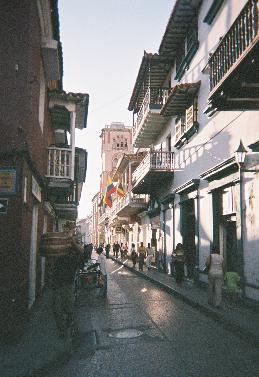
Cartagena, Colombia

ZONING FOR LOW DENSITY CAUSES MORE CONGESTION & MORE SPRAWL

Many municipalities wrongly down-zone large areas thinking this will spread out development and prevent traffic congestion. It does exactly the reverse as the spread out nature of places with people living in single-use pods of development forces everyone to drive to everything they need, resulting in increased congestion. This is why the lowest density suburban areas are the places with the worst traffic congestion. The solution is the building of compact, walkable, mixed-use communities of higher densities starting at an average of 15-20 units per acre, and going up from there.

Building high-quality transit systems connecting these walkable areas together will also help reduce auto use and encourage more walking.

LOW DENSITY PLACES ARE MORE EXPENSIVE TO BUILD AND MAINTAIN

The more spread out everything is, the more costly it is to provide municipal services such as roads, water and sewer, utilities, and emergency services. With less homes and businesses per mile of services, there is less revenue coming in to pay for these services, and therefore they are also more expensive to maintain.

Monday, March 27, 2006

mrlewishistoricalsociety

Since the notebooks were not collected today in class is there a day this week that we need to bring everything in so that you can check it?

Sunday, March 26, 2006

Test

29) a footloose inustry does not depend on anything answers A and D both make sense so how do we know which is right?

31) answers A and E reflect what purchasing pwoer can do so how do we know which is right?

32) answers B D and E all are characteristics of more devloped coutnries and icnrease productivity so how do we know which are right?

38) answers A B C all fall under D and E so how do we know which are the answers?

TEST

just making sure for the test tommorow it is mainly on chapters 11 12 13 and the past unit 2 test?

mrlewishistoricalsociety

Since the test is tomorrow are more of the questions going to be posted up?

Thursday, March 23, 2006

What!?

Could you (MR. Lewis) or someone else please explain how to do the questions on pg. 434? I'm very confused.

Wednesday, March 22, 2006

This is Friday's Assignment

1. Explore a new urbanist neighborhood and explain how it combats the problems of sprawl. Go to the website:http://www.nationalgeographic.com/earthpulse/sprawl/index_flash.html At this site you will find a recreation of a new urbanist development and by clicking on a variety of feature you can figure out the changes t ourban design that they have meade to correct for urban sprawl. Explain these changes and then explain the problems that come with urban sprawl. Be specific and use voabulary terms when possible.

2. 1-2, 434

3. 1,4 469

Remember Map Quiz Tomorrow

u gotta be kidding

are the review terms #7 a part of the Geo Question Set

Coming Soon

Extra Credit

Find Examples for these Terms

Absolute and relative direction
Scale
Distance Decay
Time-space compression
Region types
GPS
GIS
Choose One: Thunen, Weber, Stages of Growth, Burgess, Hoyt, Christaller
Dependency Ratio
Disease diffusion
Gendered Space
Push-Pull Factors
Gravity Model
Migration Patterns
Intervening Opportunity
Zero Population Growth
Acculturation
Cultural Adaptation
Diffusion Types
Maladaptive diffusion
Landscapes of the Dead
Culture Hearth
Shatterbelt
Ethnic Cleansing
Social Distance
Gender Gap
Materna Mortality Rate
Balkanization
City-State
Nation
State
Nation-State
Buffer State
Boundary Types, Origins and disputes as well as processes
Devolution
EEZ
Federalism
Gerrymandering
Heartland/Rimland
Irredentism
Iconography
Reapportionment
Terrritorial morphology
Adaptive Stategies
Agribusiness
Green Revolution
Commercial Agriculture
Debt for Nature swap
Economic activities (choose one)
Extensive Subsitence (choose one)
Hunting and Gathering
Intensive Subsistence (One type)
Mediteranean Farming
2nd Agri rev
3rd Agricultural Revolution
Tragedy of the Commons
Dependency Theory
HDI
Purchasing Power Parity
World Systems Thoery
Agglomeration Economics
Deglomeration
Growth Poles
Industry Location Theories (Choose one)
Footloose Thoery
Four Tigers
Postiindustrial

Final Review

Review for the AP Exam
1. 3 Nations in 1 (new and revised edition) / (Use revlevant vocabulary for each part)

A-In the province on the right, the minority group has a high NIR and the natives have a low NIR. The area is, in general, well developed and has a thriving popular and secular culture. How will this affect the stability of that region?

B-In the province on the left, there have been problems with urban sprawl. Describe what you think has been happening and what possilbe effects this will have along with possible solutions (you can use Colorado Springs to work off of for this part). The main city has multiple nuclei (think L.A.). What is this kind of city like and what does it reflect about that region of the country?

C-The other two countries are LDC monoeconomies and Hexagonia is an MDC. How will this affect trade?

D-Enclaves, Ghettos have formed along with a large urban underclass formed along ethnic lines thorughout the country. Describe how you think they have formed and where.

(Use revlevant vocabulary for each part)

2. Examples for hand selected terms
TBA

3. Additional review sheet
Already up and in the handouts section

Tuesday, March 21, 2006

1. Explore a new urbanist neighborhood and explain how it combats the problems of sprawl. Go to the website:http://www.nationalgeographic.com/earthpulse/sprawl/index_flash.html At this site you will find a recreation of a new urbanist development and by clicking on a variety of feature you can figure out the changes t ourban design that they have meade to correct for urban sprawl. Explain these changes and then explain the problems that come with urban sprawl. Be specific and use voabulary terms when possible.

2. 1-2, 434

3. 1,4 469

Monday, March 20, 2006

Beginning of the test bank for UNIT VI

I will be adding an additional 25 to 30 questions to this test bank but here is this for now


Unit VI Test Bank
1. The difference in per capita GDP between the more developed and less developed regions is A. widening. B. remaining constant. C. decreasing. D. zero. E. negative
2. The value of total output of goods and services in a year in a country is its A. level of development. B. gross domestic product. C. productivity. D. value added. E. development
3. Per capita GDP is a good indicator of all but which of the following? A. the approximate level of material well being in a country B. the number of countries below the poverty level C. the distribution of wealth within a country D. the spatial distribution of global wealth E. the level of industry within a country
4. An example of a primary sector activity is A. education. B. manufacturing. C. mining. D. retailing. E. shipping
5. The tertiary sector includes all but which of the following? A. transportation B. producer services C. government D. construction E. education
6. The large percentage of population involved in agriculture in China indicates that A. the country imports most of its food. B. few people are unemployed. C. most people consume an inadequate amount of calories. D. the country exports most of its food E. most people must produce food for their own survival.
7. The value of a product minus the costs of raw materials and energy is A. gross domestic product. B. value added. C. tertiary sector. D. gross national product E. productivity.
8. Which of the following is not an indicator of a country's level of development? A. infant mortality rate B. crude death rate C. age structure D. natural increase rate E. both B and D
9. Petroleum reserves in the Middle East are A. clustered primarily in the Persian Gulf states. B. dispersed throughout the region. C. concentrated primarily along the Mediterranean Sea. D. primarily in Saudi Arabia. E. clustered primarily along the Red Sea
10. According to Rostow's development model, the process of development begins when A. a high percentage of national wealth is allocated to nonproductive activities. B. an elite group initiates innovative activities. C. take-off industries achieve technical advances. D. workers become more skilled and specialized. E. per capita GDP exceeds $5,000
11. According to the international trade approach to development, a country should identify which of its following assets? A. abundant agricultural products B. high quality manufactured goods C. imports to be limited D. low cost distribution networks E. none of the above
12. The biggest problem in promoting development through the international trade alternative is A. overdevelopment of LDCs B. increased price of petroleum. C. regional cooperation. D. unequal distribution of resources. E. increased demand for many goods.
13. In contrast to the international trade approach, the self-sufficiency approach to development A. begins when an elite group initiates innovative activities. B. results in uneven resource development. C. spreads investment through all sectors of the economy. D. focuses on one industry to begin development E. suffers from market stagnation.
14. The principal benefit of the self-sufficiency approach is to promote A. balanced growth of all economic sectors. B. global competitiveness for local industries. C. the maintenance of a large bureaucracy. D. unequal distribution of resources. E. the dependency theory
15. Prior to the Industrial Revolution, the distribution of industry was A. clustered. B. concentrated. C. dispersed. D. randomly distributed. E. all of the above
16. Eastern North America is the continent's manufacturing center in part because it has access to the continent's A . largest markets B. most extensive sources of essential raw materials. C. best-maintained transportation systems. D. all of the above E. both A and C
17. Situation costs are critical to a firm that wishes to A. avoid labor unions. B. minimize production costs inside the plant. C. minimize transport costs. D. identify unique characteristics of a particular location. E. increase bulk-reducing industries
18. The location of a maquiladora plant is a good example of the importance of A. situation factors. B. site factors. C. Post-Fordist production. D. break-of-bulk points. E. none of the above
19. A company which uses more than one mode of transport will often locate near A. break-of-bulk points. B. consumers. C. raw materials. D. suburbs. E. markets
20. Beer bottling is an example of a A. perishable industry. B. specialized industry. C. bulk-gaining industry. D. communications-oriented industry. E. bulk-reducing industry
21. A manufacturer of women's and children's underwear is more likely than a manufacturer of electronic computing equipment to attempt to minimize the cost of A. land. B. labor. C. capital. D. all of the above E. both A and C
22. Demand for many industrial goods in more developed countries has been stagnant in recent years, in part because of A. low prices for many goods. B. market saturation. C. rapid population growth. D. substantial salary increases. E. lack of labor
23. By subsidizing industries such as steel and textile, governments contribute to the global problem of A. higher prices. B. stagnation C. lower consumer demand. D. oversupply. E. job loss.
24. Transnational corporations have transferred some work to less developed countries because of access to A. government subsidies. B. labor. C. markets. D. raw materials. E. capital
25. In contrast to fordist production, Post-Fordist production is more likely to A. be repetitive B. place more importance on site factors. C. assign each worker one task. D. dominate transnational corporations. E. introduce more flexible work rules.
26. What is the function of the maquiladora in the modern-day economy? A. These are foreign-owned plants that assemble imported goods for export B. These are factory incentive zones that have been funded in the cities of the developing world by the IMF C. These are a category of agricultural migrant workers who receive government subsidies to settle permanently in Latin America’s industrial cities D. These are cattle ranches in the Rio Grande Valley that grow cattle for export to the protein-deprived countries in the developing world E. These are high energy consumption regions in eastern North America and Western Europe where nuclear power is the primary energy source
27. What two features best characterize the changes affected by the Industrial Revolution? A. service industries and information processing B. technological innovation and specialization C. improved farm implements and the development of hybrid seeds D. higher literacy rates and decreased population doubling time E. well-equipped professional armies and the deployment of nuclear weapons
28. Which of these statements about core-periphery relationships is correct in characterizing the global economic system? A. It works to the advantage of periphery countries B. It works to the disadvantage of core countries C. It works to the advantage of both core and periphery countries D. It works to the disadvantage of periphery countries E. It is irrelevant in a complex worldwide economic system
29. An industry is said to be footloose if A. transport costs have little bearing on location B. transport costs determine location C. power costs determine location D. power costs have little bearing on location E. labor costs determine location
30. Which of the following is not typically defined as one of the four key determinants of development? A. Per capita GDP B. Literacy rate C. physical environment D. Life expectancy E. Amount of education
31. Purchasing power parity refers to A. the goal of reforming trade to make it more equitable B. a monetary measurement that takes into account what money actually buys C. subsidies used to strengthen home industries D. price controls designed to control supply and demand E. leveling the playing field between LDCs and MDCs
32. People are more productive in more developed countries because they A. work harder. B. have access to more technology. C. have a higher value added per person. D. are better educated. E. have a lower crude death rate
33. The political participation of women in the legislature would be measured through A. The Gender-Related Development Index B. The Human Development Index C. The Gender Empowerment Measure D. Rostow’s development model E. The international trade approach
34. Assumptions in Rostow’s development model include all of the following except A. the world is the same as when MDCs moved through the model B. every country will move from step 1 through step 5 C. LDCs do not face additional barriers due to a crowded field D. development somewhere requires underdevelopment somewhere else E. both B and D
35. A transnational corporation A. operates in countries other than the one in which its headquarters are established B. has the potential to be more economically powerful than a sovereign state C. takes advantage of global production networks D. allows corporations to take advantage of the full range of geographical variations in costs E. all of the above
36. A copper concentration mill tends to locate near a copper mine because it is a A. bulk-reducing industry. B. perishable industry. C. site factor. D. specialized manufacturer. E. capital issue
37. Since 1980, new U.S. automobile assembly plants have been built in the A. Midwest, to minimize national distribution costs. B. Northeast, to minimize access to the largest market. C. Sunbelt, to minimize labor costs. D. West, to minimize access to Japan. E. Southeast, where labor is cheap
38. Industrial areas outside North America and Europe have become increasingly important in recent years primarily because of A. access to markets. B. access to raw materials. C. break-of-bulk points. D. site factors. E. situation factors
39. All of the following are examples of perishable products except A. daily newspaper B. milk C. steel D. all of the above are perishable products E. both A and B
40. Of the three steps of textile production, which is more dependant on situation factors? A. Spinning B. Weaving C. Sewing D. all equally dependant E. none are dependant
41. Which of the following explains why the most basic industrial problem on a global scale is a gap between the world demand for products and the world capacity to supply them? A. Stagnant demand B. Increased capacity worldwide C. Expanding markets D. Lack of surplus E. both A and B
42. The most significant benefit of EPZs for LDCs is A. the influx of foreign-owned businesses B. improved jobs skills for workers C. creation of employment opportunities D. money made from tariffs E. high wages
43. Which of the following are negative aspects of EPZs? A. Components are not locally purchased B. LDC must provide infrastructure C. Concessions often outweigh benefits D. Low wage jobs E. All of the above

Hong Kong pollution leaves tourists choking

Sun Mar 19, 3:31 PM ET

HONG KONG (AFP) - Green activists said that Hong Kong's multi-billion dollar tourism industry was at risk after a survey found half the visitors to the city had complained of the worsening air pollution.

Friends of the Earth Hong Kong said the poll of tour guides also found that one in ten tourists suffered pollution-linked health problems while visiting the semi-autonomous southern Chinese territory.

The poll of more than 150 tour guides and agents who accompanied overseas and mainland Chinese tourists in Hong Kong also found that 40 percent of visitors were aware of the city's pollution problems before arriving.

"Hong Kong's lucrative tourism business, its international image and its citizens' health are at risk from the pollution in this city," said Edwin Lau, Friends of the Earth Hong Kong coordinator.

"Matters have got to a terrible state in a very quick time," Lau added, citing an study that found Hong Kong Airport recorded one day of smog-related poor visibility in every 3.5 days last year, up from one in eight in 2002.

Last week smog levels rose to such dangerously high levels that the government was forced to warn people with breathing or heart problems to stay indoors.

Visibility also plummeted, blocking out the city's famous high-rise views and reducing visibility in the busy harbour to less than a kilometer.

The government has said most of the pollution rolls in from mainland China's heavily industrialised Pearl River delta region, which has seen huge economic growth in the past decade.

However, Friends of the Earth Hong Kong and local campaigners Clear the Air say local power producers are also major culprits.

"The pollution is not 'coming down from China'," said Annelise Connell, chairperson of Clear The Air, in a statement.

"The sulphur dioxide levels are really bad ... which shows that our own power plants are involved in regional pollution," she added.

Lau said Hong Kong's two major power plants, which use a high level of polluting coal, and the city's bus companies, which rely on vehicles with poor emissions controls, were the major sources of pollution.

Tourism last year brought in a record 22 million visitors.

Saturday, March 18, 2006

number 4

hey mr. lewis,
for question number 4, what is this "cartoon disaster" you're talking about?

Japan Robot


Aging Japan builds robot to look after elderly Tue Mar 14, 10:17 AM ET

TOKYO (AFP) - A Japanese-led research team said it had made a seeing, hearing and smelling robot that can carry human beings and is aimed at helping care for the country's growing number of elderly.

Government-backed research institute Riken said the 158-centimeter (five-foot) RI-MAN humanoid can already carry a doll weighing 12 kilograms (26 pounds) and could be capable of bearing 70 kilograms within five years.

"We're hoping that through future study it will eventually be able to care for elderly people or work in rehabilitation," said Toshiharu Mukai, one of the research team leaders.

Covered by five millimeters (0.2 inches) soft silicone, RI-MAN is equipped with sensors that show it a body's weight and position.

The 100-kilogram (220-pound) robot can also distinguish eight different kinds of smells, can tell which direction a voice is coming from and uses powers of sight to follow a human face.

"In the future, we would like to develop a capacity to detect a human's health condition through his breath," Mukai said.

Japan is bracing for a major increase in needs for elderly care due to a declining birth rate and a population that is among the world's longest living.

The population declined in 2005 for the first time since World War II as more young people put off starting families.

Friday, March 17, 2006

terms

hey mr. lewis, I couldn't find the definition of a "suitcase farm" anywhere.

Thursday, March 16, 2006

Culture clash article

Dutch Immigrants Must Watch Racy Film

By BRUCE MUTSVAIRO, Associated Press Writer Wed Mar 15, 2:35 PM ET
AMSTERDAM, Netherlands - The camera focuses on two gay men kissing in a park. Later, a topless woman emerges from the sea and walks onto a crowded beach. For would-be immigrants to the Netherlands, this film is a test of their readiness to participate in the liberal Dutch culture.
If they can't stomach it, no need to apply.
Despite whether they find the film offensive, applicants must buy a copy and watch it if they hope to pass the Netherlands' new entrance examination.
The test — the first of its kind in the world — became compulsory Wednesday, and was made available at 138 Dutch embassies.
Taking the exam costs $420. The price for a preparation package that includes the film, a CD ROM and a picture album of famous Dutch people is $75.
"As of today, immigrants wishing to settle in the Netherlands for, in particular, the purposes of marrying or forming a relationship will be required to take the civic integration examination abroad," the Immigration Ministry said in a statement.
The test is part of a broader crackdown on immigration that has been gathering momentum in the Netherlands since 2001.
Anti-immigration sentiment peaked with filmmaker Theo van Gogh's murder by a Dutch national of Moroccan descent in November 2004.
Both praise and scorn have been poured on Immigration Minister Rita Verdonk, the architect of the new test and other policies that have reduced immigration by at least a third.
"If you pass, you're more than welcome," Verdonk said. "It is in the interest of Dutch society and those concerned."
Not everyone is happy with the new test.
"Today is a black day for the people intending to bring their partners to Holland," said Buitenlandse Partner, a lobbying group for mixed Dutch/immigrant couples.
Dutch theologian Karel Steenbrink criticized the 105-minute movie, saying it would be offensive to some Muslims.
"It is not a prudent way of welcoming people to the Netherlands," said Steenbrink, a professor at the University of Utrecht. "Minister Verdonk has radical ideas."
But Mohammed Sini, the chairman of Islam and Citizenship, a national Muslim organization, defended the film, saying that homosexuality is "a reality."
Sini urged all immigrants "to embrace modernity."
A censored version with no homosexual and nude material had been prepared because it is illegal to show such images in
and some other countries, filmmaker Walter Goverde said.
"With all the respect I have for all religions, I think people need to understand that Holland has its own liberal side as well," he said.
After viewing the film, which is available in most languages, applicants are then quizzed on important Dutch factoids such as the number of provinces that make up the Netherlands; the role played by William of Orange in the country's history; and Queen Beatrix's monarchial functions.
There are some major exemptions. EU nationals, asylum-seekers and skilled workers who earn more than $54,000 per year will not be required to take the 30-minute computerized exam.
Also, citizens of the United States, Australia, New Zealand, Canada, Japan and Switzerland are exempt.
_____
On the Net:
http://www.naarnederland.nl/documentenservice/pagina.asp?pagkey53768

Monday, March 13, 2006

Question Set Pointers

Feel free to bring homework to work on during class time on Tuesday as I will be at an AP conference. Here are some guidelines for the assignment.

Each answer for numbers 2 through 4 must be two to three paragraphs, have much information from your text or notes, and have ten or so sentences per paragraph. I will be highlighting certain terms on hte terms list. I will want you to spend more time on those terms and I want you TO FIND THE BEST POSSILBE DEFINITIONS FOR EACH TERM. I will be checking your terms atrandom and seeing if you got not only a correct definiiont but also a full and complete definition that does a solid job of defining the term.

Sunday, March 12, 2006

past or present qset

is the past or present qset due on the 16th or the 21st?

Saturday, March 11, 2006

Past and Present Question Set

hi...it seems i am unable to open the list of terms... can that be fixed please?

Once a Punk, Always and Punk

So Mr.Lewis...thought you got rid of me when I graduated? I'm Back!!!! To bad I'm not at Lane anymore to beat you up:)
Admit it-I was always your favorite student!!
So how are things going with your classes? Looks like your busy with all the work your giving your students. (Good for them..I had to have all that work-it's their turn now!)
Well..just thought I would stop by and say Hi. Maybe I'll come by Lane sometime.
Hope all is well. TTFN!

Mary

mr.lewis! you should've put the jailcards in before u did the grades for progress report. my mom almost killed me! lol. =P

Friday, March 10, 2006

Zippies and Homework

Meet The Zippies

By THOMAS L. FRIEDMAN (NYT) 832 words
Published: February 22, 2004

BANGALORE, India - We grew up with the hippies in the 1960's. Thanks to the high-tech revolution, many of us became yuppies in the 1980's. And now, fasten your seat belt, because you may soon lose your job to a ''zippie'' in the 2000's.

''The Zippies Are Here,'' declared the Indian weekly magazine Outlook. Zippies are this huge cohort of Indian youth who are the first to come of age since India shifted away from socialism and dived headfirst into global trade, the information revolution and turning itself into the world's service center. Outlook calls India's zippies ''Liberalization's Children,'' and defines one as ''a young city or suburban resident, between 15 and 25 years of age, with a zip in the stride. Belongs to generation Z. Can be male or female, studying or working. Oozes attitude, ambition and aspiration. Cool, confident and creative. Seeks challenges, loves risks and shuns fears.'' Indian zippies carry no guilt about making money or spending it. They are, says one Indian analyst quoted by Outlook, destination driven, not destiny driven; outward, not inward, looking; upwardly mobile, not stuck-in-my-station-in-life.

With 54 percent of India under the age of 25 -- that's 555 million people -- six out of 10 Indian households have at least one zippie, Outlook says. And a growing slice of them (most Indians are still poor village-dwellers) will be able to do your white-collar job as well as you for a fraction of the pay. Indian zippies are one reason outsourcing is becoming the hot issue in this year's U.S. presidential campaign.

I just arrived here in Bangalore, India's Silicon Valley, to meet the zippies on the receiving end of U.S. jobs. Judging from the construction going on every block here, the multiple applicants for every new tech job, the crowded pub scene and the families of four you see zipping around on a single motor scooter, Bangalore is one hot town.

Taking all this in, two things strike me about this outsourcing issue: One, economists are surely right: the biggest factor eliminating old jobs and churning new ones is technological change -- the phone mail system that eliminated your secretary. As for the zippies who soak up certain U.S. or European jobs, they will become consumers, the global pie will grow, and ultimately we will all be better off. As long as America maintains its ability to do cutting-edge innovation, the long run should be fine. Saving money by outsourcing basic jobs to zippies, so we can invest in more high-end innovation, makes sense.

But here's what I also feel: this particular short run could be a real bear -- and politically explosive. The potential speed and scale of this outsourcing phenomenon make its potential impact enormous and unpredictable. As we enter a world where the price of digitizing information -- converting it into little packets of ones and zeros and then transmitting it over high-speed data networks -- falls to near zero, it means the vaunted ''death of distance'' is really here. And that means that many jobs you can now do from your house -- whether data processing, reading an X-ray, or basic accounting or lawyering -- can now also be done from a zippie's house in India or China.

And as education levels in these overseas homes rise to U.S. levels, the barriers to shipping white-collar jobs abroad fall and the incentives rise. At a minimum, some very educated Americans used to high salaries -- people who vote and know how to write op-ed pieces -- will either lose their jobs, or have to accept lower pay or become part-timers without health insurance.

''The fundamental question we have to ask as a society is, what do we do about it?'' notes Robert Reich, the former labor secretary and now Brandeis University professor. ''For starters, we're going to have to get serious about some of the things we just gab about -- job training, life-long learning, wage insurance. And perhaps we need to welcome more unionization in the personal services area -- retail, hotel, restaurant and hospital jobs which cannot be moved overseas -- in order to stabilize their wages and health care benefits.'' Maybe, as a transition measure, adds Mr. Reich, companies shouldn't be allowed to deduct the full cost of outsourcing, creating a small tax that could be used to help people adjust.

Either way, managing this phenomenon will require a public policy response -- something more serious than the Bush mantra of let the market sort it out, or the demagoguery of the Democratic candidates, who seem to want to make outsourcing equal to treason and punishable by hanging. Time to get real.

1. Define terms
2. Explain how the demogrpahic transition model relates to the core-periphery model.
3. How does the shift from primacy to secondary in the periphery relate to agricultural systems and their changes
4. What issues do Middle Eastern countries face in terms of economic devleopment and how does the cartoon disaster relate to economic issues (think folk and popular culture issues).

You must use text and / or notes information in each answer. Each answer for numbers 2 through 4 must be two to three paragraphs, have much information from your text or notes, and have ten or so sentences per paragraph

Monday, March 06, 2006

whoa!

better late than never right? sorry! here's what i got for the little chart thing though:

for the economic rankings (x-axis) i found a list of the top 20 countries:
1. luxembourg
2. norway
3. switzerland
4. ireland
5. denmark
6. iceland
7. U.S.
8. sweden
9. japan
10. finland
11. austria
12. U.K.
13. netherlands
14. belgium
15. france
16. germany
17. australia
18. san marino
19. canada
20. italy

this was found on nationmaster in the econmic category, GDP nominal(per capita) stat. now all you have to do is look up the human welfare for these countries and rank them from 1-20 (assuming that for the y-axis that 1 is the lowest and 20 is the highest) then simply put a dot (i think) where each country stands on human welfare. does he really expect us to do this for the lowest 20 as well? he only gave us one chart...
i hope this helps someone!

HELP

does no one know how to do number 4 or are people just ignoring our cries?! lol. c'mon! someone help us. mr.lewis, where are you?

EMQ 8!!!

Who has any idea how to do number 4 for the EMQ 8? I'm sure others have constantly checked this blog for some kind of response, but there are none! If anyone knows how to do this problem, please post!

China

It is 2:26 in the morning and what am I doing? I am reading an article about China. I blame you Mr. Lewis.

Sunday, March 05, 2006

number 4

I'm confused as well. How do we graph the countries? and where are the countries?

EMQ 8, # 4

Do we need to have information about certain countries or do we just pick random ones? Because it says "Look up the Human Welfare and economic rankings of thetop twenty countries and rank them. Do the same for the lowest twenty." But what twenty countries are they talking about? And it also says "Rank the countries on the chart handed out on Friday." But as Willman said, our papers didnt have a list of countries.

help!

i don't understand what we hafta do for this handout. what countries do we rank & how do we graph them? also, what do we hafta write about? please, help me somebody! =[

the handout

Is it just me or on the handout that mr lewis gave us on friday, not have countries listed on them. All i have is this "graph" with lines outlining three regions and those regions only have I, II, and III on them. Does anyone have the countries listed on them?

Friday, March 03, 2006

Stat sheets for EMQ

Look up your stats either at nationmaster.com or the ciafactbook. They are both on the links page. You need to find their ranking according to gdp per capita (this is the economic ranking). Rank them from 1 to 20. Both sites can list the countries by rank and you need not look them up one by one. Then you shold be able to find the humand development index by using this website: http://hdr.undp.org/statistics/data/ If you have any problems, please post. I will not have much net time this weekend but can check my email via my cell phone so email me at lewis3431@yahoo.com, if you are in dire need of help.

Thursday, March 02, 2006

Maquiladora Barbie

Mexico Labor Case Grows For Maker of Barbie Gowns
By ELISABETH MALKIN; ELISABETH MALKIN ALSO REPORTED FROM TEPEJI DEL RíO FOR THIS ARTICLE. (NYT) 1384 words
Published: June 12, 2005

MEXICO CITY, June 11 - There was not much that Guadalupe Ávila Jiménez liked about her factory job making children's costumes, including flowing Barbie gowns for little girls who like to play princess.

''They shouted at us, they did not let us go to the bathroom, they gave us food that made us vomit,'' said Ms. Ávila, 21, reciting a litany of indignities she said she had suffered at the factory, in Tepeji del Río. About the only thing she did like were the costumes the workers made. ''What we made was really pretty,'' she said.

Today the factory is facing a labor dispute that is anything but pretty. What started out as a local struggle may now shift its focus to the American toy giant Mattel, which licenses the Barbie label to the plant's owner, Rubie's Costume Company, based in Richmond Hill, Queens. Unlike other toy companies, Mattel has an eight-year-old code of conduct for subcontractors and licensees.

Saying they were fed up with managers who called them names, closed factory doors to force overtime and required them to buy work equipment and even toilet paper, Ms. Ávila and 60 co-workers -- most young women, some as young as 15 -- voted for a new union. In April, they say, they were locked out and lost jobs that paid little more than $5 a day.

Mattel and Rubie's deny allegations of verbal abuse, forced overtime, making workers buy equipment and the consistent use of child labor, and they say the workers were not dismissed but walked off the job.

''They said we chained people to sewing machines,'' Marc Beige, president of Rubie's, one of the world's largest costume companies, said by telephone from New York. ''That's outlandish. There's nobody being locked in the factory.''

An audit last month by Mattel of the Rubie's plant found several violations of its code of conduct, including one worker who was 15, said Lisa Marie Bongiovanni, a spokeswoman at Mattel's headquarters in El Segundo, Calif. ''Child labor is a zero-tolerance issue for us,'' she said.

The auditors did not speak to the workers picketing outside, she said.

The dispute has revived charges of abuses in Mexico's export assembly plants, known as maquiladoras, and of obstacles to independent unions.

Mexico's toy and garment industries have been hard hit in recent years as many maquiladoras have left for China in search of cheaper labor, creating more pressures on workers. The plants that remain are mostly in the interior, like the one in Tepeji del Río, a hardscrabble town 60 miles north of Mexico City, where wages are lower than on the border.

''China has served as a pretext to diminish labor conditions,'' said Salim Kalkach Navarro, secretary general of the Labor Vanguard Federation of Workers, the union that Rubie's workers voted to join. It is known by its abbreviation in Spanish, F.T.V.O.

At the same time, organizations that a decade ago fought poor working conditions in garment plants around the world say the toy industry has escaped similar scrutiny.

Stephen Coats, executive director of the US/Labor Education in Americas Project, a Chicago labor advocacy group, charged that Mattel had not responded aggressively to the workers' complaints. ''I'm just kind of stunned they are behind the curve,'' he said.

He said labor advocates would continue to pressure Mattel to correct any abuses at the plant and require Rubie's to allow the workers to choose their own union. ''As long as the union is pressing forward its collective demand, Mattel is frankly a juicy target,'' Mr. Coats said.

Mattel's code may in fact make it more vulnerable to pressure.

Lance Compa, of the School of Industrial and Labor Relations at Cornell University, said, ''Mattel actually does have a fairly advanced code of conduct and there is some evidence that they try to have it implemented in their licensees.''

American labor activists and the F.T.V.O. charge that eight workers at Rubie's were younger than 16, including several who were 14 when they were hired. Mexican law permits 14- and 15-year-olds to work only a reduced day, which the union says did not happen.

Mattel requires workers to be at least 16, and Mattel and Rubies acknowledge that the audit turned up one 15-year-old.

Ms. Giovanni, the Mattel spokeswoman, said that as a result of Mattel's audit, Rubie's has promised to hire only employees older than 16 and set up a system to identify forged documents. It has also committed to paying overtime correctly and on time.

Until the dispute is settled, Mr. Beige, Rubie's president, said the plant was accepting fewer orders. It has not made the Barbie costumes since January for reasons unrelated to the dispute, he said. He acknowledged increasing competition from China but said the plant intended to stay in Mexico.

This week, Teresita de Jesús Hernández, 15, joined the workers protesting outside the plant. Until she lost her job, she said, she was the sole support for her mother, who suffers from a heart condition and diabetes.

At 12, she left school and began working in another garment plant nearby. At 14, she was hired at Rubie's and was told that her age was no problem. The plant manager altered her birth certificate, she said.

''It was O.K. at first,'' she said. But then, she said, workers were required to carry heavy loads. ''They gave us special belts and asked us to pay $45 for them.''

Rubie's says that no worker was ever required to pay for equipment.

Three other underage workers were also protesting at the plant. The union says another four, including a 13-year-old boy, have remained at home for fear of reprisals.

The dispute has followed what has become almost a standard script in maquiladora labor conflicts over the past decade. Workers try to form their own union, only to find that they have been represented -- often without their knowledge -- by a union that is part of the Confederation of Mexican Workers, the old-line federation that was a pillar of the Institutional Revolutionary Party, or PRI, which ruled Mexico for 71 years.

Labor analysts and activists here and in the United States hoped that the election of President Vicente Fox in 2000 would loosen the old federation's grip on labor. But nothing has changed, many say.

''It's clear that the old-line labor groupings have worked out a modus vivendi with the Fox government, and they've basically gone back to business as usual,'' said Mr. Compa of Cornell.

Harley Shaiken, director of the Center for Latin American Studies at the University of California, Berkeley, in a separate interview, agreed. ''You can count the number of independent unions in maquiladoras on one hand and still have fingers left over,'' he said.

Mr. Kalkach, the F.T.V.O.'s secretary general, said Rubie's initially agreed to sign a contract, which was filed and accepted with the national labor board. He produced a copy of the board's decision.

But a few days later, the board rejected the contract, on the grounds that a contract already existed with another union from the Confederation of Mexican Workers.

The long wait is taking its toll. About 50 of the workers accepted severance payments from Rubie's on Monday.

The union is also appealing the national labor board's rejection of the contract. Suspicious of the monitoring Mattel says it has done so far, the union has asked Mattel to set up an independent monitoring system for its licensee plants in Mexico. Mr. Kalkach said, ''That's a moral demand, not a legal demand.''

Photo: About 60 workers in Tepeji del Río contend they were locked out after protesting against labor violations at a Rubie's Costume Company plant. (Photo by Adriana Zehbrauskas for The New York Times)

Map of Mexico highlighting Tepeji del Río: In Tepeji del Río, workers' wages are lower than on the border.

Final EMQ Question

Rank the countries on the chart handed out on Friday. I will scan in a copy for those that need it. Look up the Human Welfare and economic rankings of the top twenty countries and rank them. Do the same for the lowest twenty. Why do Poland, Moldova, Cuba and Sri Lanka rank higher on the human welfare than on the economic dimension? Why does Saudi Arabia rank higher on the economic dimension? How does this relate to the oil production of Saudi Arabia?

Go to Nationmaster and choose any ten statistics you want. Make five of the typical and five non-typical statistics of a country. Figure out which country would be best based of off those ranking factors. Use the terms on pages 315 to 327 and explain what the postitives or negatives are of your country. YOU MUST USE MATERIAL FROM THE CHAPTER.