Pedestrian Cities - New Urbanism
Pedestrian Cities - Quality of Life - Benefits of Density
|

|
|

Copenhagen is another of the world’s great pedestrian cities. A recent issue of 'Metropolis' magazine talks about Copenhagen and its growing pedestrian street network. Although it’s blessed with certain inherited characteristics - such as a narrow medieval street grid - the city has worked steadily to improve the quality of its street life. In the 40 years since Copenhagen’s main street was turned into a pedestrian thoroughfare, city planners have taken numerous small steps to transform the city from a car-oriented place to a people-friendly one. “In Copenhagen, we have pioneered a method of systematically studying and recording people in the city,” says Jan Gehl, a Danish architect and co-author of ‘Public Spaces-Public Life’, a study on what makes the city’s urban spaces work. “After twenty years of research, we’ve been able to prove that these steps have created four times more public life.” Here is Copenhagen’s program for a more pedestrian-friendly city: |

| COPENHAGEN’S 10-STEP PROGRAM |
| ------------------------------------------------------------------------------------------------------------------------------------------------ "The invention of the city was a spiritual and technical achievement the historical significance of which surpassed by far the discovery of fire or the invention of the wheel." -Leon Krier ------------------------------------------------------------------------------------------------------------------------------------------------ |
| Quality of Life New Urbanism is creating and restoring walkable, diverse, compact towns and cities that enable a higher quality of life by offering new choices for living. PEDESTRIAN FRIENDLY URBAN PLACES This is the highest quality environment possible for living. It includes a full range of services within a 5-10 minute walk of every residence. At minimumm, this would include grocery stores, deli's, bakeries, newsstands, coffeehouses, vegetable stands, open-air markets, personal services, parks, and green spaces. A full range of entertainment and cultural activities are also desirable, all in an attractive, friendly atmosphere. European cities are some of the finest examples of pedestrian friendly living forms. Venice is the best example of this because cars were never allowed to enter the city - the entire city is composed of all pedestrian streets. Venice also has the most complete, most varied and beautiful continuous urban fabric. Each neighborhood has its own central square or campo that acts as it's heart and soul. These are within walking distance of all the residents, and offer a full range of services as well as social interactions. CITIES AND TOWNS AS WORKS OF ART The combination of beautiful architecture with great urbanism creates the most beautiful places to live, places that express a life of richness and tradition, and act as a comfortable stage for the drama of life. PLACES FREE FROM DANGER AND TOXINS An environment offering a high quality of life is a place free from noise, pollution, toxins, and danger. This includes safe streets everyone can walk along, clean air to breathe, clean and healthy water and food. A SAFE, COMFORTABLE, AND EFFICIENT TRANSPORTATION SYSTEM An integral part of a high quality environment is a quality transportation system that everyone can use to easily get around locally and regionally. Read about the many benefits of trains |
| |||
| ||||
|


|
Benefits of Density |
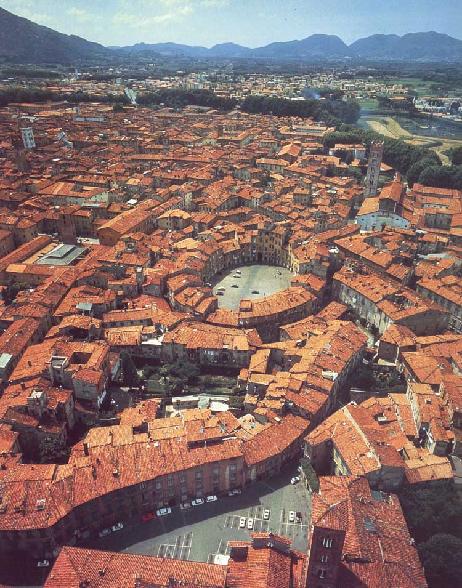
| Nearly every great city, town, and neighborhood around the world are of higher density, and why everyone loves living there, and why so many tourists go there on holiday. Great examples of high-density walkable environments include San Francisco’s Victorian ‘painted ladies’, Brooklyn’s brown-stones, Boston’s Back Bay neighborhood, Washington DC’s Georgian townhouses, and much of London, Paris, Italy, and the rest of historic Europe. Most early American cities built before 1945 were designed with higher densities, and are now the places with the highest property values, and are some of the most sought after places to live. These examples demonstrate a building form of high-density elegance, human scale, and walkable urbanity. A more modern example of higher density is South Beach in Miami, with an average density of around 30 to 35 units per acre in mostly low-rise buildings of only 2-4 stories, with little or no parking on site. People love the place. With everything all together in a human-scale urban setting, more than half the residents don’t need to drive a car for a majority of their needs. This level of density makes it possible for many residents to forgo the expense and hassle of owning and maintaining a car, which can cost upwards of $8,000 per year. |
|
ZONING FOR LOW DENSITY CAUSES MORE CONGESTION & MORE SPRAWL
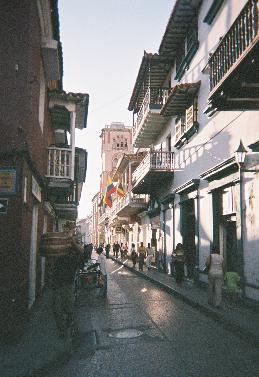
Many municipalities wrongly down-zone large areas thinking this will spread out development and prevent traffic congestion. It does exactly the reverse as the spread out nature of places with people living in single-use pods of development forces everyone to drive to everything they need, resulting in increased congestion. This is why the lowest density suburban areas are the places with the worst traffic congestion. The solution is the building of compact, walkable, mixed-use communities of higher densities starting at an average of 15-20 units per acre, and going up from there.
Building high-quality transit systems connecting these walkable areas together will also help reduce auto use and encourage more walking.
LOW DENSITY PLACES ARE MORE EXPENSIVE TO BUILD AND MAINTAIN
The more spread out everything is, the more costly it is to provide municipal services such as roads, water and sewer, utilities, and emergency services. With less homes and businesses per mile of services, there is less revenue coming in to pay for these services, and therefore they are also more expensive to maintain.
posted by mrlewishistoricalsociety @ 1:53 AM


0 Comments:
Post a Comment
<< Home